
What Is a Benzie County Court Docket
A docket is the chronological index of everything filed and decided in a case. Each line, called a docket entry, records a single event with a date and a short label, such as a complaint filed, a motion heard, an order entered, or a hearing set. The docket is the map of a case. It is not the case file itself. The full file holds the actual documents, the motions, exhibits, and signed orders, while the docket just points to them in order.
Michigan court rules shape how much of that record a court can post online. The public-access provisions in the state court rules book explain what courts may publish and what stays offline. The Michigan court rules, chapter 8, cover court-record access and the limits on posting full document images.
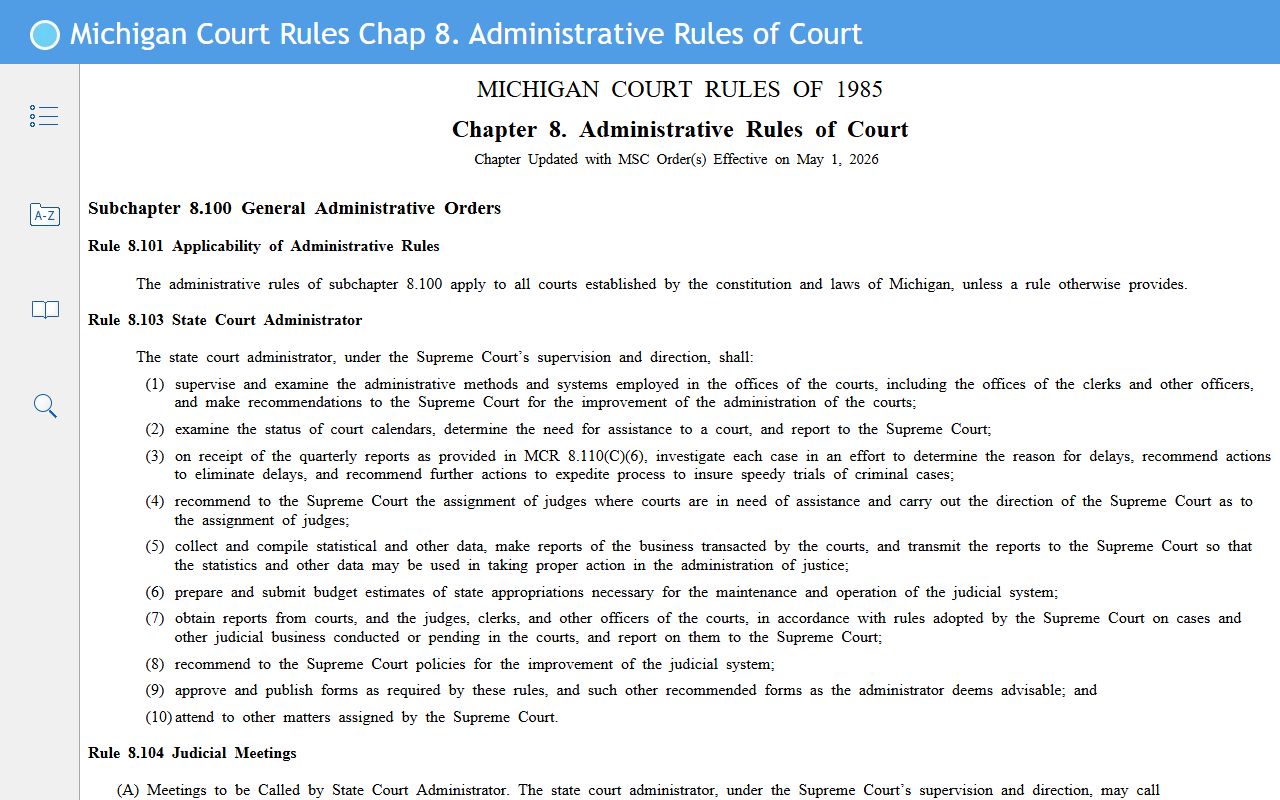
That is why a Benzie County docket usually shows the event list freely but sends a reader to the clerk for the underlying documents.
How to Find Benzie County Dockets Online
The county's docket data lives in MiCOURT, the statewide case-search system. The clerk, circuit court, and probate court pages all route readers there. To keep results tied to the local courts, use the Benzie filter for the 19th Judicial Circuit. The tool is free, and it returns the case's event history along with parties, judge, and next hearing where the record is public. Start at the MiCOURT case search and filter to the 19th Judicial Circuit court view.
The steps below walk through a standard docket lookup.
- Open the MiCOURT case-search page and choose the 19th Judicial Circuit court filter.
- Enter a case number for a direct match, or a last name and first name for a party search.
- Pick a case-type category to separate criminal, traffic, domestic, or probate matters.
- Open the case and expand it to view the docket entries and event history.
MiCOURT can expand a case into detailed parts. Its documented expansion fields include case age, charges, judge, next hearing, participants, petitions, prosecutor, and referee. Those expanded parts are what turn a bare case row into a readable docket. Case status values run from open to closed, disposed, deferred, mediation, and adr, so the label alone signals where a case stands.
Name searches match beginning text rather than loose spellings. Enter a name as cleanly as possible, and add a birth date or a case-type filter when a common name returns too many hits. A case number always beats a name for a clean, single result.
Sample Benzie County Docket Entry
Every docket entry follows a pattern. It carries a date, an event label, the party or court behind it, and sometimes a pointer to a document. Reading the columns in order tells the story of the case without opening a single file. The inventory below shows the fields a reader will meet on a typical MiCOURT case timeline.
| Field | What It Shows |
|---|---|
| Entry Date | The date the event was filed or recorded |
| Event Type | The action, such as a motion, order, or hearing |
| Party Filing | Which side or the court entered the item |
| Hearing Date | The next or scheduled court date, when set |
| Judge or Referee | The judicial officer tied to the event |
| Disposition | An outcome entry, such as a plea or judgment |
| Document Link | A pointer to the filed document, where the court posts it |
Not every entry fills every field. A scheduling entry may show only a date and a hearing label, while a closing entry carries the disposition.
Courts That Publish Benzie County Dockets
Three trial courts generate the dockets a reader will search, and all three feed the same statewide portal. The 19th Judicial Circuit Court serves Benzie and Manistee counties together and handles the felony and larger civil dockets. The 85th District Court is the local court for misdemeanors, traffic, small claims, and landlord-tenant matters. The Probate Court keeps estate, guardianship, and conservatorship dockets. There is no separate county-run docket site, so the state case search is the practical path for all three.
- 19th Judicial Circuit Court: felony, domestic relations, juvenile, and civil dockets over $25,000.
- 85th District Court: misdemeanor, traffic, civil infraction, and small-claims dockets.
- Probate Court: estate, guardianship, conservatorship, and commitment dockets, public cases only.
Probate case search is limited to public cases, which is the court's own signal that some matters stay off the open docket entirely. The circuit court is shared with Manistee County, yet family and probate work is concentrated locally, so most Benzie docket questions resolve within the county's own offices.
Public and Restricted Benzie County Docket Entries
Most docket entries are open. Michigan treats court and county records as public unless a rule or statute restricts them, and that default is set in state law. The Freedom of Information Act declares the general right to inspect public records, subject to defined exemptions. The policy statute is MCL 15.231, and the definitions that fix which bodies and records it reaches sit in MCL 15.232.
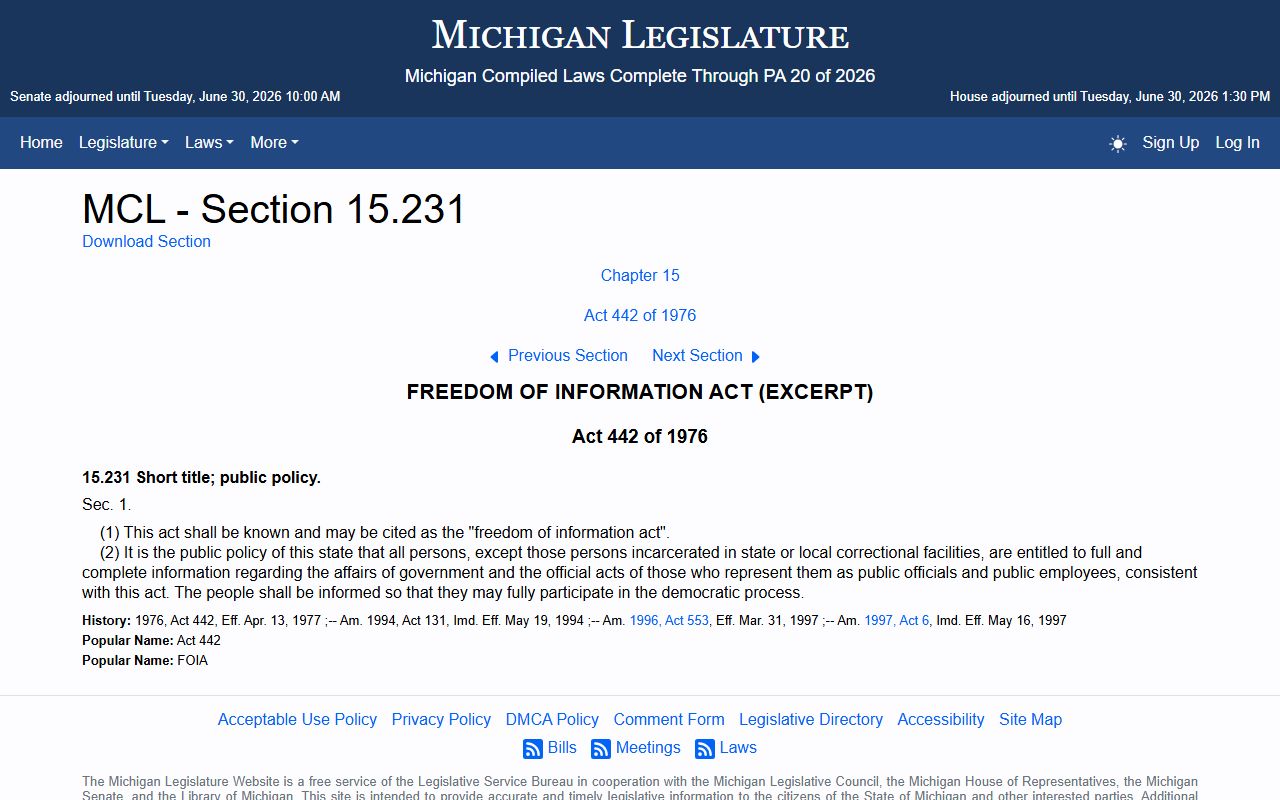
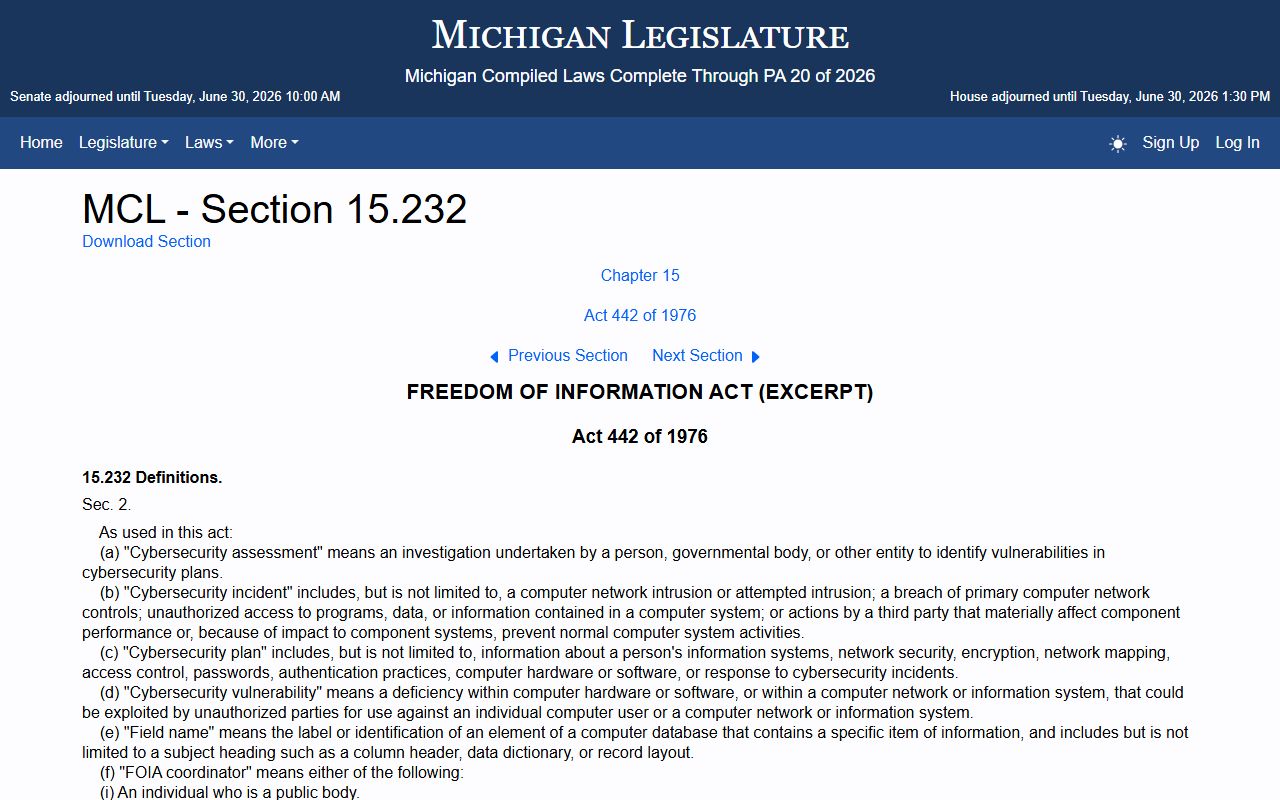
The same act defines which offices count as public bodies and which materials count as public records. That scope is what puts the county courts, the clerk, and their docket data inside the law's reach. The statutory definitions are set out in the FOIA definitions section.
Some entries stay hidden even when a case is otherwise known. Juvenile matters, sealed cases, adoption files, and mental-health commitment records are kept out of ordinary public search. Personal data, such as Social Security numbers and minors' identifying details, is redacted where the law requires it. A reader who hits a blocked entry can ask the court or file a request, but the record stays restricted until a rule or an order opens it. The exemption categories that support those withholdings are listed in MCL 15.243.
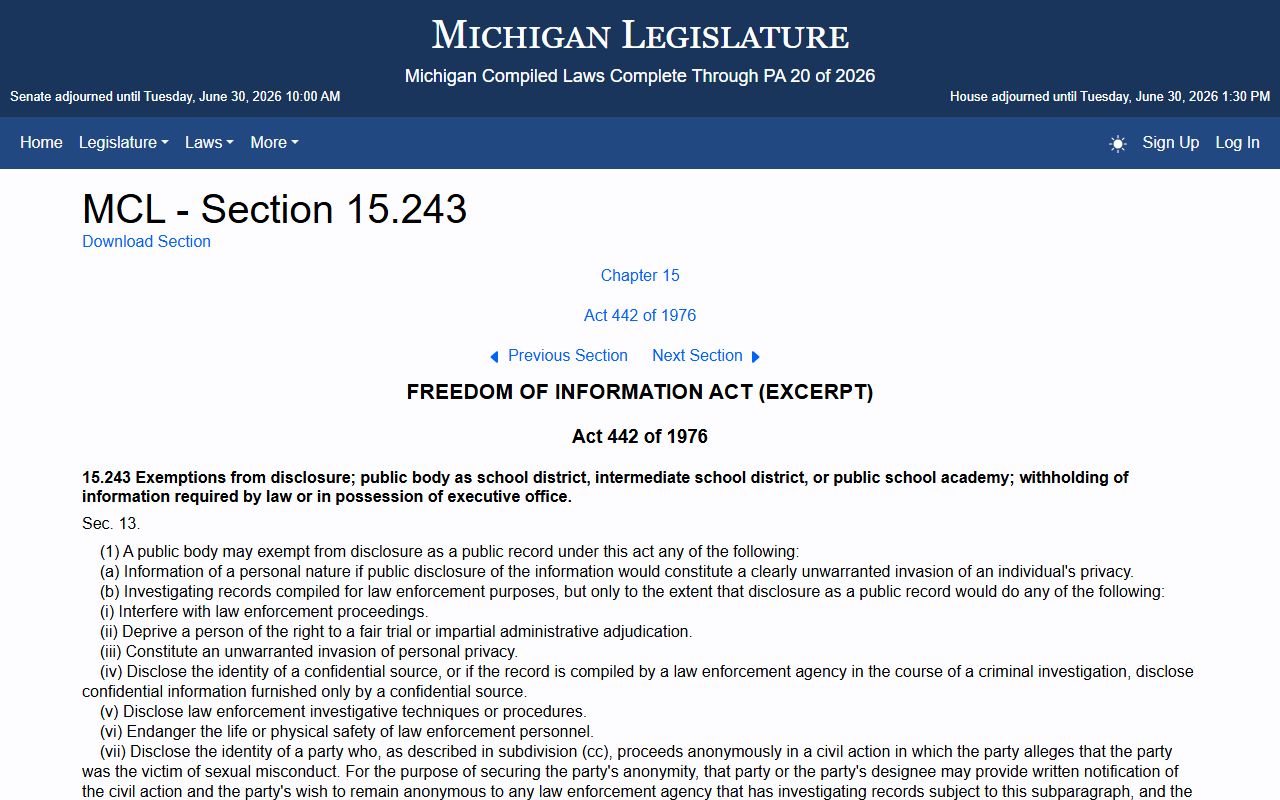
A public docket may therefore show that a case exists while keeping specific entries or documents off the open view.
Note: A suppressed or nonpublic case may not appear in ordinary docket search at all, so a blank result does not always mean no case exists.
Docket vs. Full Case Record in Benzie County
The docket and the full case file are not the same thing, and readers often want one when they need the other. The docket is a free, online index of events. The full record is the stack of actual documents, and getting it may take a fee or a trip to the clerk. The county fee schedule confirms that copies from a court file run $1 per page and a certified copy is $10 for the first page. The comparison lays out the split.
| Docket | Full Case Record | |
|---|---|---|
| Format | List of dated entries | Full filed documents |
| Access | Often online and free | May require a fee or clerk visit |
| Content | Event labels and dates | Motions, orders, exhibits, transcripts |
| Use | Track case progress | Legal review and evidence |
For the fuller picture of what a case file holds, the Benzie County court records walk through the complete field set behind the docket.
Finding Older Benzie County Dockets
Online case search leans toward current and recent matters. Older dockets, non-digitized files, and anything not posted through court search take a direct request. The County Clerk holds the court's paper records and can pull an older docket or file for a copy fee. When the record sits with a county office rather than a court, the county FOIA process is the route. That office responds commonly within five business days, and a deposit is expected when the estimated fee tops $50.
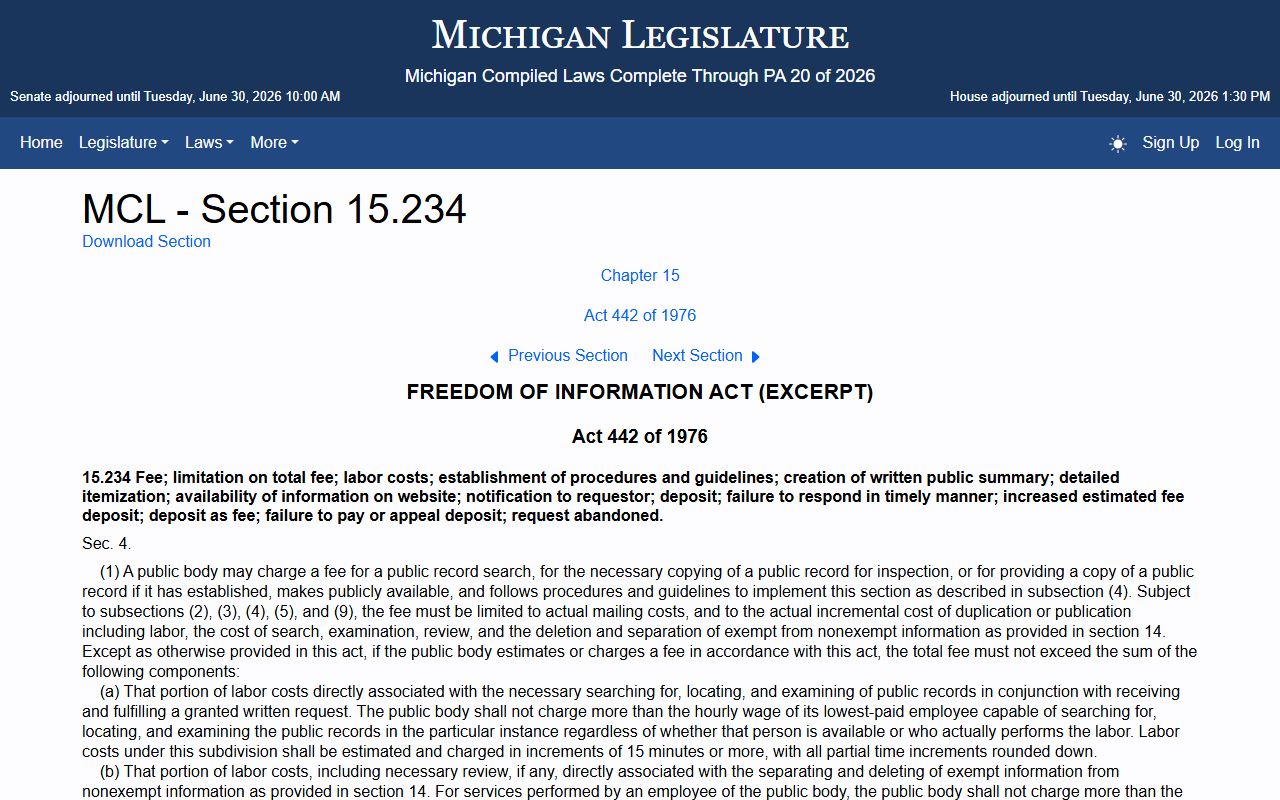
Response times and lawful fees for those requests are fixed by statute. The FOIA timing and cost rules live in MCL 15.234.
For older files, the practical order is simple. Try MiCOURT first, then ask the clerk in person or by phone, then use FOIA for county-held records that no court search returns.
Benzie County Clerk
Upper Level Government Center
448 Court Place, Suite 200
Beulah, MI 49617
231-882-9671 ext. 2
Monday to Friday, 8:30 a.m. to 5:00 p.m.
County FOIA: 231-882-0558, FOIA@benzieco.gov
Benzie County Docket Terms Explained
Docket labels use a small set of legal words over and over. Knowing them turns a cryptic event list into a clear timeline. The terms below appear across criminal, civil, family, and probate dockets in the county's courts.
- Plaintiff
- The party that files a civil case and asks the court for relief.
- Defendant
- The party being sued or charged and responding to the case.
- Motion
- A formal request asking the judge to rule on a specific issue.
- Order
- A written decision or direction signed by the judge.
- Disposition
- The entry that records how the case or a charge was resolved.
- Continuance
- A postponement that moves a hearing or deadline to a later date.
Watch the disposition and continuance lines most closely, since they tell a reader whether a case is still open, delayed, or finished. Criminal dockets add their own words, such as arraignment, plea, bond, and sentence, while civil and family dockets lean on motion, order, and judgment. A petitioner and a respondent take the plaintiff and defendant roles in probate and family matters. Reading a few entries in order usually makes the pattern clear, even without the underlying documents.