
Warrant Records in Benzie County
A warrant is a court order that lets police arrest a person, search a place, or bring someone before a judge. In Benzie County, a judge of the 85th District Court or the 19th Judicial Circuit Court signs the order, and the sheriff's office is the agency that serves it. The prosecutor often asks for the warrant after reviewing a police report. The record starts in the court file and moves to law enforcement for action.
No public warrant database exists for the county. The official county pages do not host a warrant lookup, a most-wanted page, or a bench-warrant search tool. That means a Benzie County warrant search runs through a chain of channels instead of a single site. The sheriff can share disclosable warrant details, the county's FOIA process covers records that are not posted online, and the underlying court case can confirm whether a warrant was issued. Statewide systems fill the rest of the gap.
Because the record lives in more than one place, the fastest path depends on what you already know. A case number points to the court file. A name and date of birth help the sheriff or a records clerk find the right person. Starting with the office closest to the warrant saves time.
Checking for a Benzie County Warrant
The practical way to check is to work the fallback chain in order. Start with the sheriff's office, which can confirm disclosable warrant information by phone. When the record is not something the office will read out over the phone, a written public-records request is the next step. The sheriff's FOIA channel and the county FOIA office both handle those requests. The image below comes from the Benzie County Sheriff FOIA page.
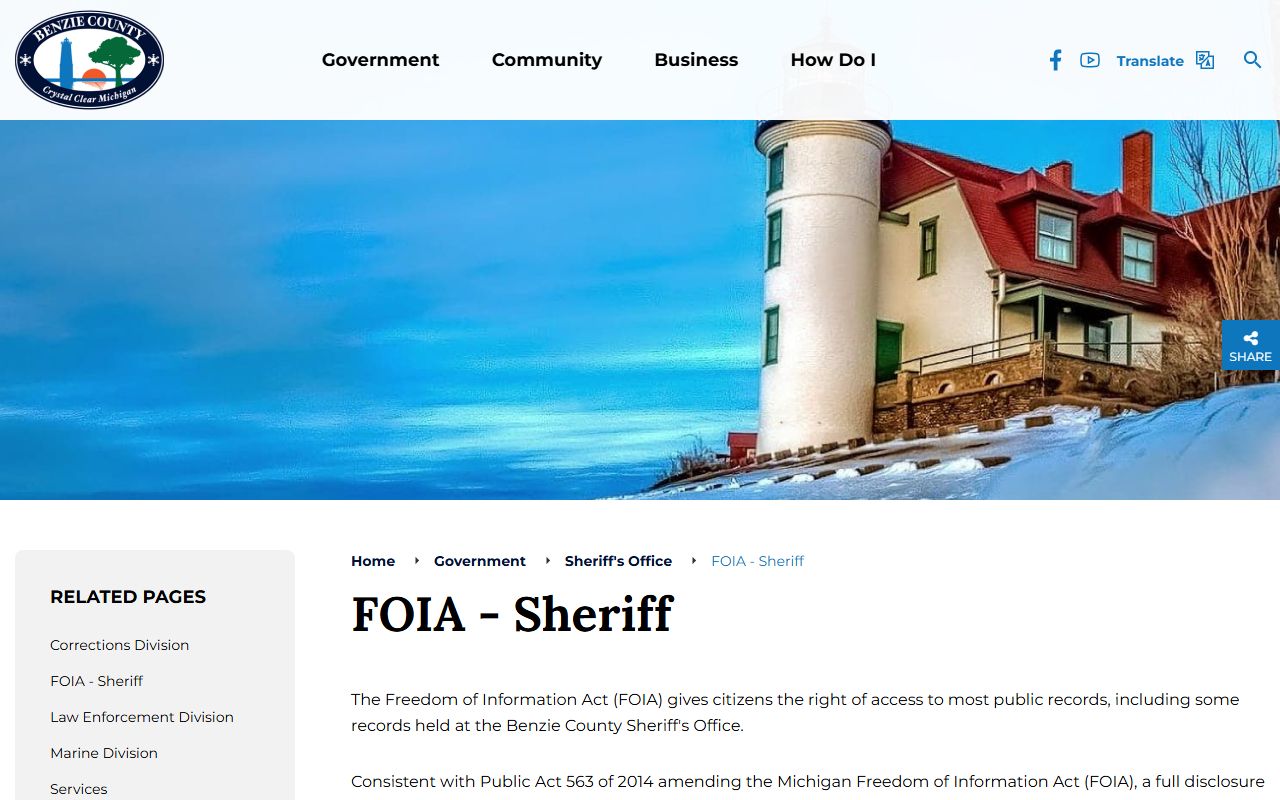
That page lists the request instructions and the direct contacts used for sheriff-held records, including possible warrant material.
- Call the Benzie County Sheriff's Office at 231-882-4484 and ask whether a warrant is on file for the person and what it covers.
- File a sheriff FOIA request at 231-882-4484 x231, fax 231-882-5814, or email LEvans@Benzieco.Gov when the detail is not shared by phone.
- Use the county FOIA office at 231-882-0558 or FOIA@benzieco.gov for county-held records that are not posted online.
- Search the underlying court case in MiCOURT case search to see hearings, case status, and warrant-related events.
- Check Michigan VINELink for custody and release status when the person may already be held.
Benzie court results are reached through the local 19th Circuit court filter. A traffic matter may instead surface through the Michigan eTix ticket search, since a missed traffic hearing can lead to a bench warrant.
Types of Warrants in Benzie County
Not every warrant works the same way. Some order an arrest, some force a court appearance, and some allow a search. Knowing the type helps a reader understand why the warrant exists and how to clear it. The most common kinds seen in county courts break down as follows.
- Arrest warrant - A judge signs it after finding probable cause that a person committed a crime, and it authorizes police to take that person into custody.
- Bench warrant - The court issues it from the bench when someone misses a hearing, ignores a court order, or fails to pay as ordered.
- Search warrant - It lets officers search a named place for specific evidence, and it is tied to an investigation rather than a person's court status.
- Capias or failure-to-appear - This is a bench-style order to seize a person who did not show up, often after a traffic or misdemeanor citation.
Arrest and search warrants usually start with the prosecutor and police. Bench and capias warrants usually start with the court itself after a party drops off the case. Both routes end with the sheriff carrying out the order.
Requesting Benzie County Warrant Information
Since there is no self-service warrant portal, a request needs enough detail for the sheriff or a records clerk to find the right file. The more identifying information you provide, the faster the office can confirm or deny a warrant. The table below lists the fields that help a warrant request or phone inquiry move quickly.
| Field | Type | Required | Notes |
|---|---|---|---|
| Last Name | Text | Yes | The primary key the office uses to locate a person. |
| First Name | Text | Yes | Narrows common surnames to the right individual. |
| Date of Birth | Date | No | Separates people who share a name; strongly recommended. |
| Case Number | Text | No | Points straight to a court file when a case is already open. |
| Your Contact Information | Text | Yes for FOIA | Needed so the office can send a written FOIA response. |
A phone call can settle simple questions, while a FOIA request creates a written answer for records that are not read out by phone. Response on a county FOIA request commonly comes within five business days, with a deposit expected if the estimated fee tops $50.
What a Benzie County Warrant Record Shows
When warrant details are released, they follow a standard set of fields. Some information may be withheld while an investigation is active, but the core of a warrant record is consistent. The table below outlines the fields a reader is most likely to see.
| Field | What It Shows |
|---|---|
| Warrant Number | The unique identifier the court or agency assigns to the order. |
| Issue Date | The day the judge signed the warrant, which sets how long it has been active. |
| Charge | The offense or the reason for the warrant, such as a felony count or a missed hearing. |
| Bond Amount | The dollar figure set for release, where the court has fixed one. |
| Issuing Court | Whether the 85th District Court or the 19th Judicial Circuit Court signed the order. |
The full picture often lives in the court case rather than a single warrant printout. Reading the docket shows the charge, the hearing history, and the event that triggered the warrant. The charges themselves are covered in more depth on the Benzie County criminal court records.
Bench Warrants and the 85th District Court
Many local warrants are bench warrants, and they often begin with something small. A traffic citation or a misdemeanor ticket in the 85th District Court sets a court date or a payment deadline. When a person misses that date or fails to pay, the judge can issue a bench warrant for failure to appear. What started as a civil infraction can turn into an arrest order.
This is why a warrant search sometimes runs through a ticket lookup first. A citation processed through the state eTix system may reveal a case that has slipped into failure-to-appear status. From there, the court can confirm whether a bench warrant followed. Clearing the original ticket or setting a new hearing is usually what lifts the warrant.
Note: a bench warrant does not go away on its own, and it stays active until the person appears, resolves the case, or the court recalls the order.
Resolving an Outstanding Benzie County Warrant
An outstanding warrant does not fix itself, and waiting usually makes matters worse. A warrant can lead to an arrest at a traffic stop, at work, or at home. The steadier path is to take control of the situation with help. The steps below outline how most people resolve a warrant in the county.
- Confirm the warrant is real by contacting the sheriff or checking the underlying court case, so you know the charge and the issuing court.
- Talk to a defense attorney before doing anything else, especially if the warrant involves a criminal charge.
- Ask the court or your attorney whether the warrant can be recalled by setting a new hearing or posting bond.
- Gather your case number, identification, and any funds you may need for a bond or a fine.
- Appear as directed or arrange a voluntary surrender through counsel, which often looks better to the court than an arrest.
Important: Speak with a lawyer before you turn yourself in, because an attorney can arrange bond, protect your rights, and often reduce the time spent in custody.
Clearing a Record After a Case Ends
Once a warrant is resolved, the underlying case may still show on a background check. Michigan law lets some people set aside, or expunge, an eligible conviction so it no longer appears as an open, public matter. The relief is handled by the court, not the sheriff, and it follows a formal process with notice and a hearing. The image below is from the Michigan expungement hearing statute, MCL 780.621g.
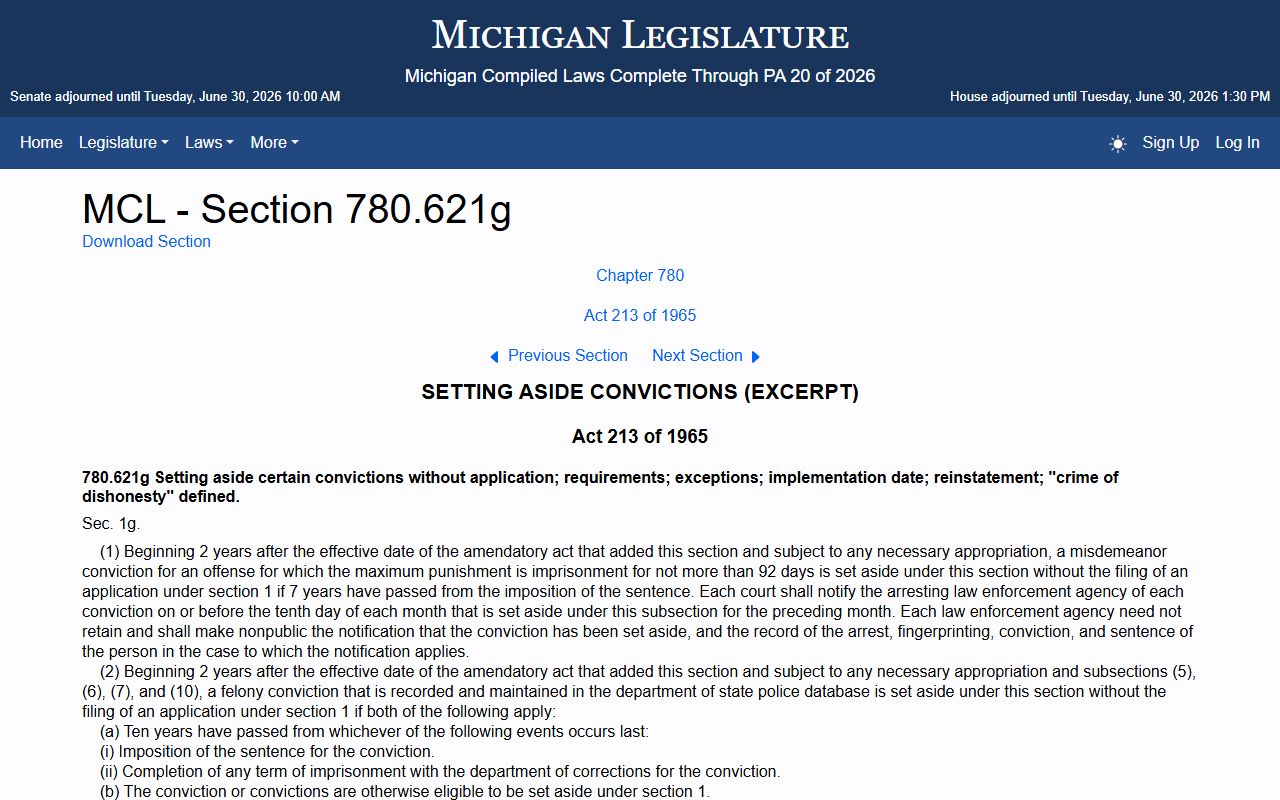
That statute sets the notice and hearing procedure a court follows before it grants a set-aside. The legal effect of a granted order is described in MCL 780.623, which is shown below.
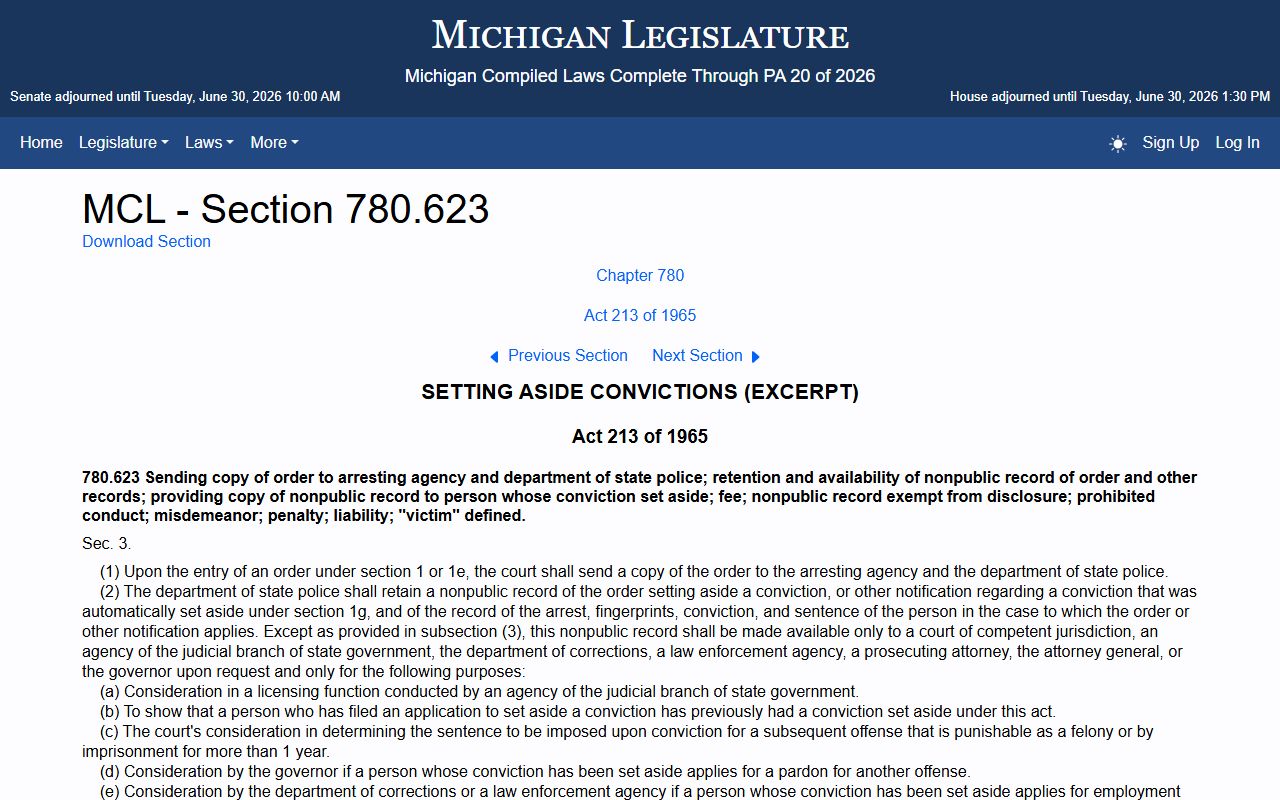
A set-aside order changes the public status of the record, though the file does not vanish from every government system. To pursue it, a person confirms the offense is eligible, gathers the case details, files in the proper court, gives notice to the prosecutor, and attends any scheduled hearing.
VINELink and Custody Notifications
Sometimes the question behind a warrant search is really about custody. If a person has already been arrested on a warrant, the next concern is whether they are being held and when they may be released. Michigan VINELink offers free custody and release notifications for that purpose. A registered user can get an alert when a status changes.
VINELink works alongside the jail and the courts rather than replacing them. It is a notification tool, not a warrant database, so it will not tell you whether an unserved warrant exists. When the person is in custody, the jail's own information and the Benzie County inmate records give the fuller booking picture. VINELink then keeps a victim or family member informed as the case moves.
Restricted Benzie County Warrant Records
Not all warrant information is open to the public. A sealed warrant tied to an active investigation may be withheld so the target is not tipped off. Search warrants can stay confidential until they are executed and returned. Michigan FOIA also lets an agency redact or hold back details that fall under a statutory exemption, and a warrant request can meet those limits.
Juvenile matters are held to an even tighter standard. State law restricts access to juvenile case records, including warrant-related detail. The image below is from the Michigan juvenile records statute, MCL 712A.28.
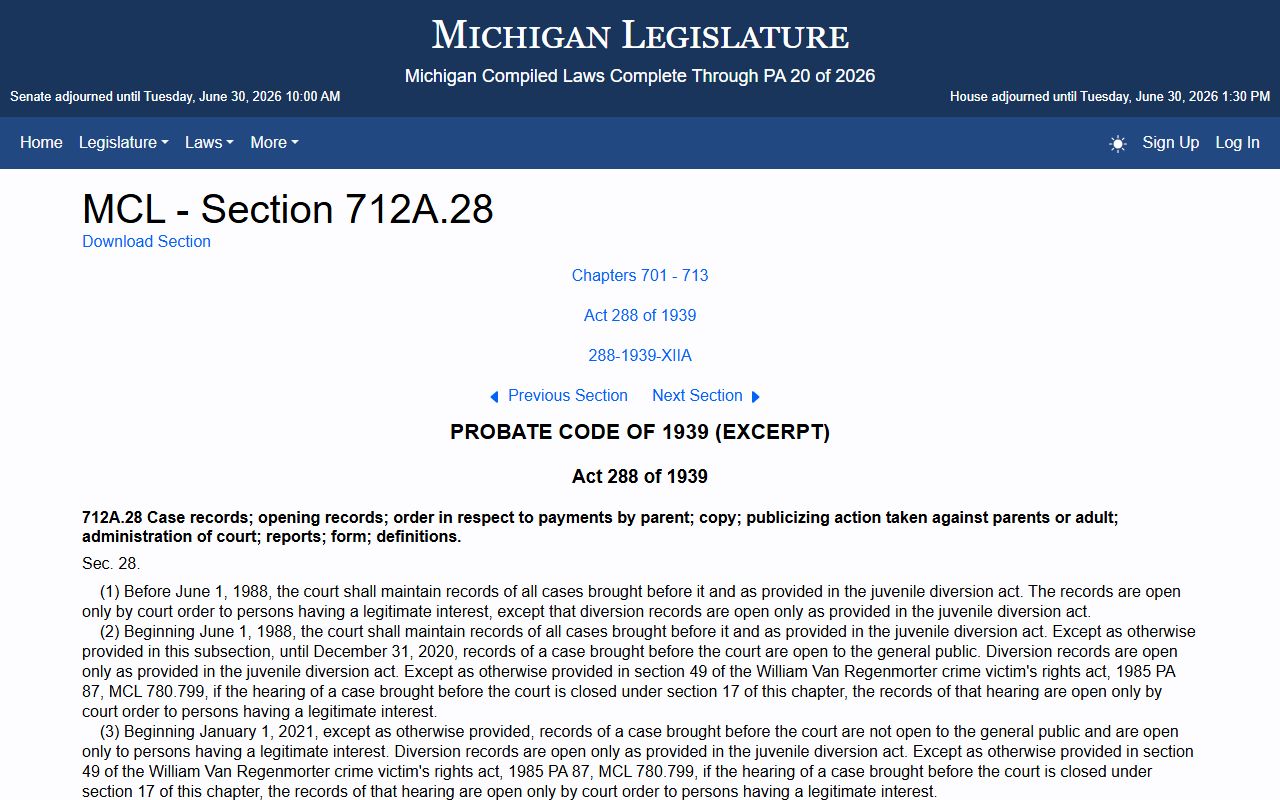
That statute limits who can see a juvenile file, so juvenile warrant detail is generally not open to the public. Federal warrants sit outside the county system entirely and route through federal agencies rather than the Benzie County Sheriff. When a warrant is not disclosable, the office will say so, and the person named can still learn the basics through an attorney.